
CyberActive News
Fines Don’t Make Better Drivers. Courses Do.
What 26 years and millions of graduates have taught me about traffic school
By Sharon Ourian ·
The Saturday Problem
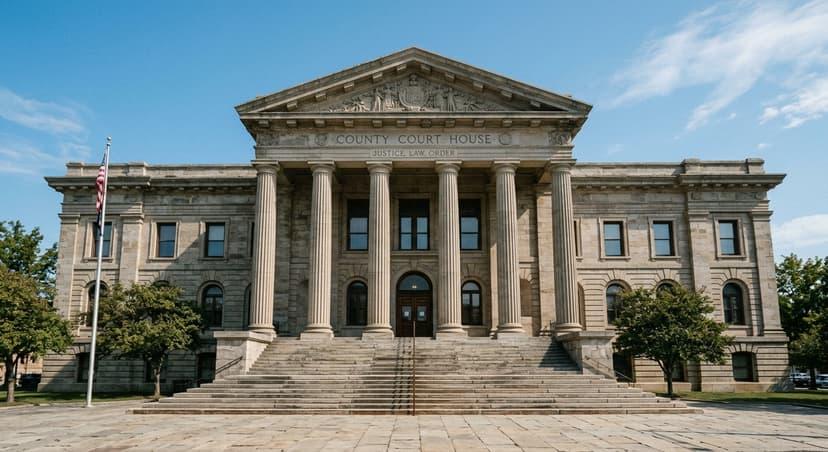
Every weekend, in county courthouses and strip-mall classrooms across America, people who got a speeding ticket surrender a Saturday. They find child care. They give up a shift. They sit in a folding chair for four to eight hours while someone reads slides aloud. Many of them, if they are honest, retain almost nothing.
And those are the lucky ones. In the jurisdictions that offer no traffic school at all, the ticket simply becomes a bill. You pay the fine, the surcharge, the court cost and the assessment, the points go on your record, your insurance rises, and the state has taught you exactly one thing: that it wanted your money.
I have spent twenty-six years arguing that there is a better way, and that it has been sitting in plain sight since the first web browser. Let people take traffic school online, on their own time, on their own phone, and let the course, not the fee, be the consequence. The largest states in the country already do this. The evidence that it works is a generation old. The only thing missing in the holdouts is a judge willing to say yes.
What a Fine Actually Does
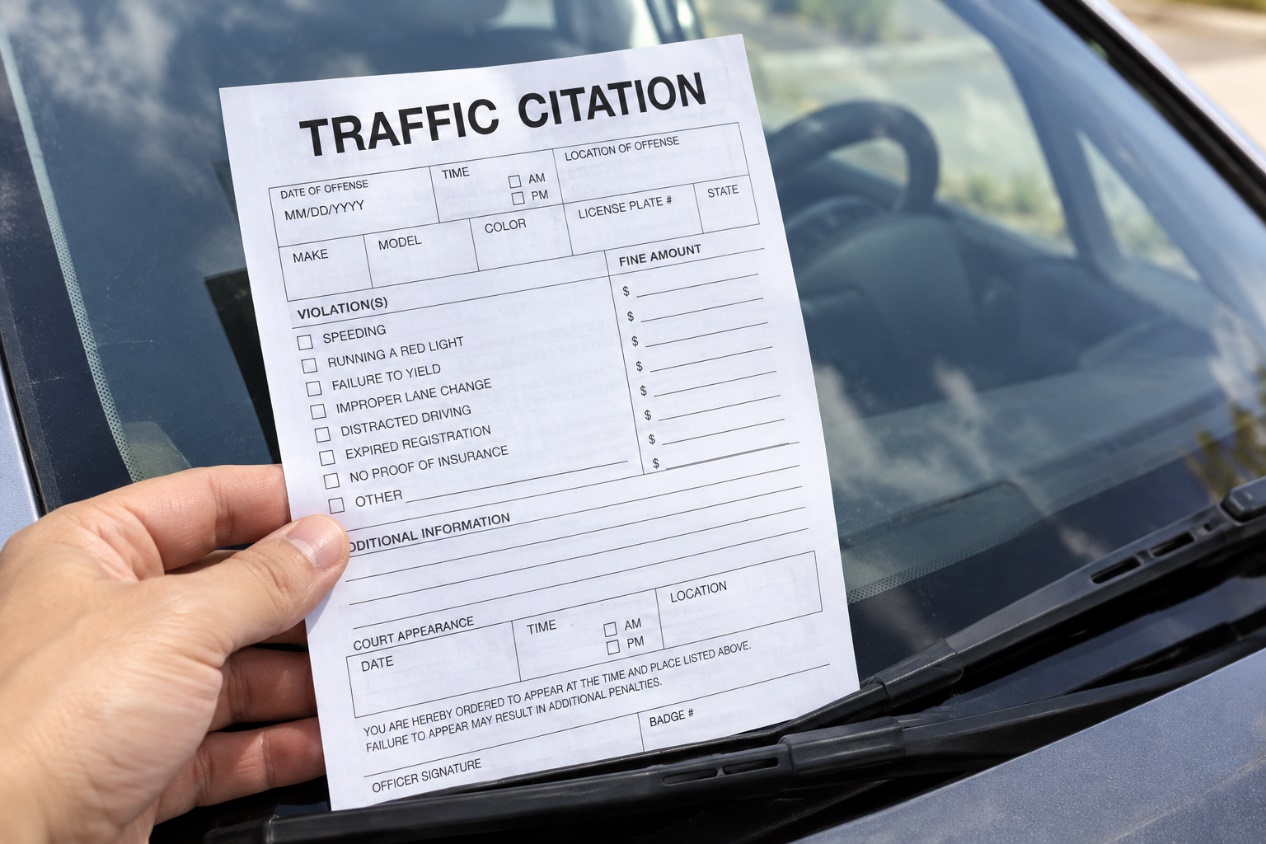
A fine is a remarkably weak teacher. The research on traffic fines and fees now runs a decade deep, and its conclusion is uncomfortable for anyone who believes the point of a citation is safer roads.
The Fines and Fees Justice Center reports that 44 states and the District of Columbia suspend, revoke or refuse to renew licenses over unpaid traffic and court debt, producing more than 11 million debt-related suspensions. Florida alone imposed roughly $880 million in fines and fees in criminal and traffic cases in 2019 and issued 1.2 million suspension notices to people who could not pay. In Colorado, about 100,000 drivers a year lose their licenses for unpaid traffic debt or missed court dates, nearly 87 percent of all suspensions in the state.
None of those suspensions removed a dangerous driver from the road. They removed a driver who was short on cash. A Rutgers study found that 42 percent of people whose licenses were suspended lost their jobs. A Brennan Center analysis found that Washington State spent close to $38 million in 2015 prosecuting suspended-license cases, more than half of what it collected in fines and fees that year. When Tennessee compared the years it suspended licenses for unpaid debt with the years it did not, researchers found no statistically significant difference in collections.
The arithmetic is as grim for the courts as for the drivers. Fee-only enforcement produces collections cases, failure-to-appear warrants, reinstatement hearings and clogged dockets. It generates work without generating safety. A judge who signs a fee schedule is not sentencing anyone to learn anything. The sentence is: pay, or we will make it harder for you to earn the money to pay.
Why Education Beats Penalty
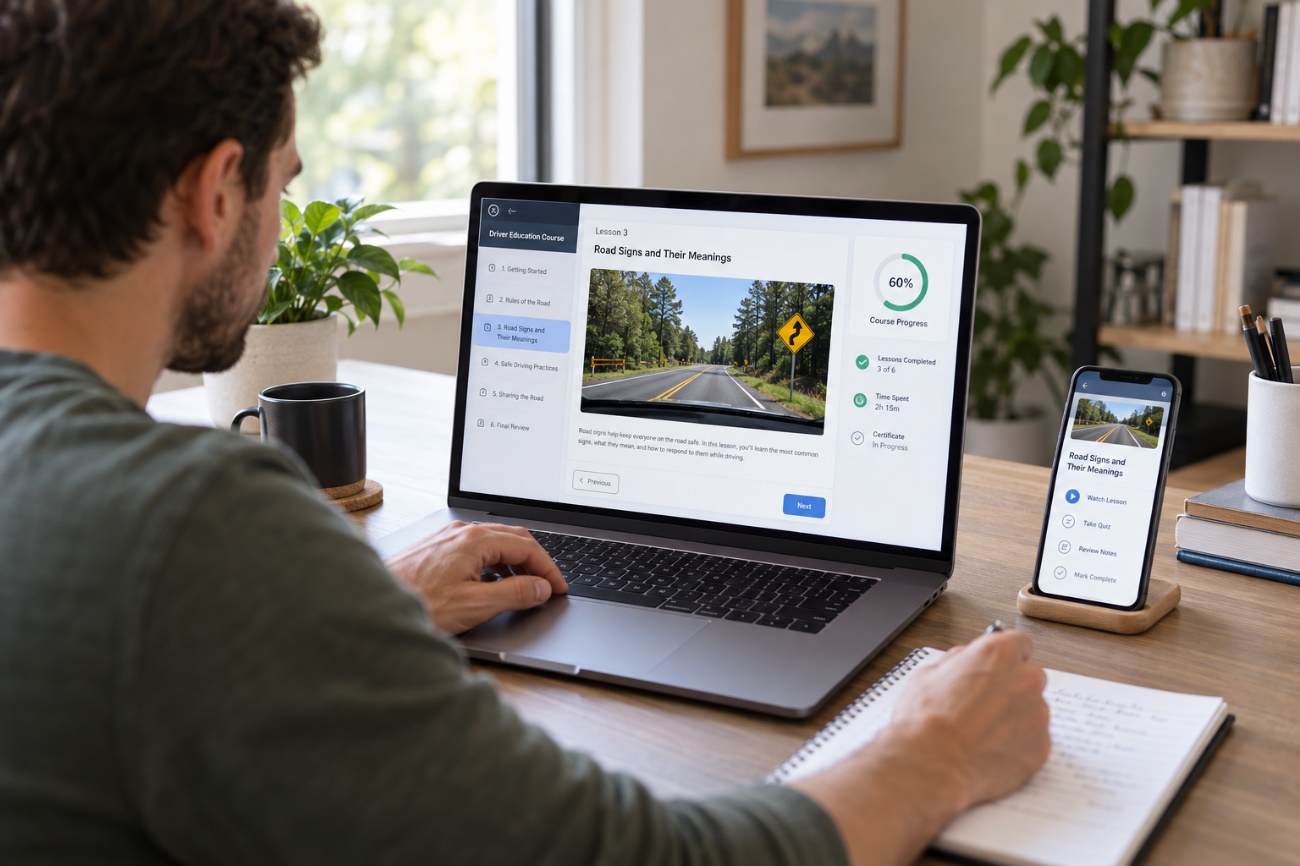
Education is not a soft alternative to punishment. It is the one intervention in the traffic system that has been measured against driving behavior rather than against a ledger.
New York’s evaluation of its driver improvement program followed 84,806 drivers before and after a defensive driving course and reported a 15 percent drop in crash rates and a 56 percent drop in conviction rates, both statistically significant. Arizona’s two-year study of more than 35,000 repeat violators found that a course built around motivation and lawful driving produced 8 percent fewer violations and 20 percent fewer crashes over the following year than a conventional survival course. North Carolina’s citation-dismissal program drew 36,000 motorists into a four-hour defensive driving course in its first year alone, with the charge dismissed on completion and no court appearance required.
The honest caveat is that older classroom studies from the 1970s and 1980s were mixed, and that the quality of the curriculum matters enormously. That is an argument for insisting on good courses, not for abandoning instruction. A fine has never been shown to lower a driver’s crash rate at all. A well-built course has, repeatedly.
There is also a civic argument that judges understand better than anyone. A driver who completes a course leaves the system having done something. A driver who pays a fine leaves resentful, and the resentment attaches to the court, not to the behavior. Procedural fairness research has shown for decades that people obey laws they believe were applied fairly. A course is a chance to be fair.
The First Judge
In 2000 I was a law student at UCLA with a traffic ticket and a question: why did I have to drive across Los Angeles to sit in a classroom when the entire course could be delivered through a browser? California had approved the first online traffic school only four years earlier, and most courts still refused the format outright. The objection was always the same. How do you know the person at the keyboard is the person on the ticket?
So I built the answer before I built the company. The course asked identity questions at random points, drawn from information only the registrant would know, with a short time limit and removal from the course on failure. It logged every click. It timed every page. Then I went to a judge in California and made the argument that still animates everything we do: let traffic violations be handled through accessible safety education rather than clogging the court with people paying to make tickets go away, or attending classes that many of them, because of work and family, simply cannot attend.
That judge said yes. Others followed, first in California, then in Colorado, where I drove from courthouse to courthouse presenting to judicial council meetings until judges who had approved the course began recommending it to their colleagues. By the time I finished law school, CyberActive had become one of the first online traffic schools in the country, and the identity-verification approach we pioneered had been adopted by banks. We have now graduated millions of drivers across more than thirty states.
What Indiana Decided
Indiana did something in 2003 that most states still have not done: it put the question of online driver safety to a formal, competitive test. The Bureau of Motor Vehicles issued a request for proposals for its Driver Safety Program. Vendors were required to submit roughly 100 pages covering identity security, software, curriculum, reporting, data retention, uptime and financial stability. The state did not ask whether online instruction was acceptable in principle. It asked who could prove it.
CyberActive was selected as one of the original providers, operating as ABetterDriver.com. When competitors protested the award, I argued the case in person before the state, and the award stood. The contract has been renewed through every procurement cycle since, most recently under RFP 25-80190, with the newest contract effective January 2026. Since 2015 alone, more than 93,000 Hoosiers have completed our Driver Safety Program and more than 7,000 teenagers have completed our driver education course, with an average customer recommendation score of 9.0 out of 10.
What the Indiana model gets right is that it treats the course as a tool of the court rather than a product of the market. A judge may order a Driver Safety Program as part of a sentence. The BMV may require it after repeated convictions. Any driver may take it voluntarily for a four-point credit once every three years. Online, DVD and classroom formats carry identical legal standing. Providers must report completions daily, meet uptime standards, log every customer inquiry and resolve issues within days. A state that wants the convenience of online delivery without surrendering rigor already has the template. It is on file in Indianapolis.
What Baton Rouge Learned
Louisiana has no statewide online traffic school. Approval sits with each court, which means every judge and prosecutor in the state can make this decision tomorrow morning. In 2013 the City of Baton Rouge did.
The East Baton Rouge Parish Attorney’s Office issued a request for proposals for an exclusive online defensive driving program. Ticketed drivers would complete a six-hour course, built to Louisiana law, and have eligible moving violations converted to non-moving violations, sparing them the insurance consequences of points. The city required a platform that could handle up to 50,000 training views a year, collect the City Court fee and the prosecutor’s surcharge at enrollment, remit those funds weekly by electronic deposit, and give officials a live dashboard showing every participant’s status and activity log. The vendor would bear every cost: curriculum, setup, hosting, training, five years of record retention.
CyberActive won the contract against bidders from Louisiana and elsewhere. Local companies protested; the city council held a hearing, reviewed every submission and reaffirmed the award. The program ran for years and was renewed repeatedly until the pandemic. The city received a steady stream of court fees without issuing a single invoice, drivers kept their insurance rates, and the court cleared cases without adding a Saturday class to anyone’s calendar.
Baton Rouge was not alone. In Louisiana, Colorado, Georgia, Oregon, Utah and Washington, where approval is court by court, we have worked directly with dozens of municipal, city, parish and circuit courts, from Lafourche Parish to Pueblo to Colorado Springs to Renton. The pattern repeats: one judge approves the course, sees the docket thin and the complaints vanish, and recommends it to colleagues. The courts that call us next are usually referred by the courts that already said yes.
The Four Largest States Already Do This
The four most populous states, home to roughly a third of all Americans, have each decided that online traffic school and online driver education are safe enough for their residents. They did not reach that conclusion casually. Each regulates providers, audits curricula and requires completions to be reported electronically to the state and the court.
| State | Online traffic school | What completion does | Online driver education | Regulator |
|---|---|---|---|---|
| California | Yes, DMV-licensed since 1996; providers re-licensed under tougher DMV rules in 2012 | Masks one eligible moving violation from the public record once every 18 months | Yes, DMV-approved for teens | California DMV |
| Texas | Yes, 6-hour defensive driving approved by TDLR | Court-approved ticket dismissal, once every 12 months | Yes, TDLR-approved teen, parent-taught and adult (18–24) courses | Texas Dept. of Licensing & Regulation |
| New York | Yes, Internet Point and Insurance Reduction Program (I-PIRP), 6 hours | Up to 4 points removed from the suspension calculation and a mandatory 10% insurance reduction for 3 years | Yes, online 5-hour pre-licensing course | New York DMV |
| Florida | Yes, 4-hour Basic Driver Improvement, FLHSMV-approved | Keeps points off the record on election, once per 12 months, up to 5 times | Yes, 4-hour Traffic Law and Substance Abuse Education course online | Florida Highway Safety & Motor Vehicles |
Notice what these four states have in common. None of them lost control of their drivers. All of them gained reporting they never had in the classroom era, where a paper certificate was the only record that anyone attended. All of them turned a Saturday into an evening on the couch, and in doing so turned a chore into something a driver might actually finish.
A state that still forbids online traffic school is now asking its residents to accept a standard of convenience and accountability that California, Texas, New York and Florida abandoned a generation ago. The question is not whether the format works. Four states with 110 million people have answered that. The question is why a smaller state should hold its citizens to a harder rule.
What a Court Actually Gets
The case for online traffic school is usually made to drivers. It should be made to clerks, because the court gains at least as much.
- Fees collected without collections. The provider collects the court’s fee and any surcharge at enrollment, by card, before the driver sees a single lesson, and remits it on a weekly schedule by electronic deposit. In Arizona we do this for the Supreme Court and more than 60 individual courts. No invoices, no payment plans, no warrants.
- A record that exists. A classroom produces a signed roster. An online course produces a timestamped log of every page, every quiz, every identity check and every minute spent, retained for five years and available to the court on a dashboard it can open at any hour.
- Fewer appearances. A driver who elects the course and completes it before the deadline never needs a hearing. Baton Rouge, North Carolina and Texas all built their programs on that single efficiency.
- Zero budget. The vendor bears the cost of curriculum, hosting, support, training and compliance reporting. The court’s only investment is the signature that approves the program.
- A course in the court’s own name. A white-label program carries the court’s branding, its eligible-violation list, its fee schedule and its rules, with the provider invisible behind it. The court sets policy; the platform executes it.
None of this requires a statute. In court-approval states, a judge or prosecutor can authorize a program by order. In states with a regulator, the regulator can add an online delivery format to an existing approved curriculum, as Washington did in 2024 when it opened its Safe Driving Course for suspended drivers to online providers.
The Objections, Answered
“People will cheat.” This was the objection in 2000, and it was reasonable then. It is not reasonable now. Modern courses verify identity with the same tools banks use: knowledge-based questions drawn from credit and public records, text-message verification, voice biometrics that require the participant to call in and match a voice sample at random intervals, page timers, activity monitors that log a user out after three minutes of inactivity or the moment another browser window opens. Arizona’s approval process took two years and imposes some of the strictest identity standards in the country. Texas requires two independent third-party verification methods. The cheating objection assumes a classroom is secure. Ask any instructor who has watched a room of forty people stare at their phones.
“We will lose revenue.” Courts do not lose revenue when they add a course option; they add a fee that is actually paid. A driver who chooses education pays the fine reduction the court sets plus the course fee, and the court’s share arrives by deposit. The revenue a court loses is the revenue it was never going to collect: the fine that ages into a collections file and a suspended license.
“Online is less rigorous.” Rigor is a property of the curriculum and the standards the approving body sets, not of the room. Indiana requires 240 timed minutes, daily completion reporting, quarterly uptime and resolution logs, and a 99 percent uptime target. New York requires six timed hours and reports completions to the DMV within ten weeks. Florida requires four hours of instruction and electronic certificate transmission to both the state and the clerk. A state that writes rigorous standards gets a rigorous course. A state that offers nothing gets nothing.
“Our residents are not online.” More than two-thirds of internet use now happens on mobile devices, and a traffic school course runs on a phone. The people least able to reach a Saturday classroom, shift workers, single parents, rural drivers an hour from the county seat, are precisely the people a phone reaches.
A Modest Proposal
I founded CyberActive after losing someone to a drunk driver. I have never believed that a fine would have saved that life, and I have never met a judge who believed it either. What judges believe, in my experience, is that the traffic docket is the one place where the court meets ordinary citizens who are not criminals, and that the encounter should leave them better drivers rather than poorer ones.
So here is the proposal, and it is small. If your state regulates traffic school, add online delivery to the approved formats and write the standards as strictly as you like; Indiana will lend you the template. If your state leaves it to the courts, sign an order approving an online program, in your court’s name, with your fee schedule and your eligible-violation list, and let the provider do the rest. Watch the docket for six months. Then tell the judge in the next county.
That is how it spread through California in 2000, through Colorado’s judicial councils, through the parishes of Louisiana and the justice courts of Utah. Not by legislation, but by one judge at a time deciding that the purpose of a traffic ticket is to make the road safer, and that a fee has never once done that.
Don’t penalize your people with fees. Educate them. They will drive better, your docket will shrink, and the court will have taught something worth knowing.
For courts, municipalities and agencies interested in offering online driver safety education: Partner With Us
Sharon Ourian is an attorney and the founder of CyberActive, Inc. (www.cyberactiveonline.com), one of the nation’s first online traffic schools, which has graduated millions of drivers and provides white-label driver safety programs to courts, municipalities and state agencies in more than thirty states. CyberActive operates the following consumer websites: www.gototrafficschool.com, www.driveredtogo.com, www.teendrivingcourse.com, www.abetterdriver.com, www.getdefensive.com, www.adultdriversed.com, www.illinoisadultdriversed.com, www.texasdriversedexpress.com and www.prepwizardexpress.com.
Sources
- Fines and Fees Justice Center, Florida fines and license suspensions
- Fines and Fees Justice Center and ACLU, Reckless Lawmaking (Colorado suspensions)
- Fines and Fees Justice Center testimony, Kansas HB2434 (44 states, 11 million suspensions)
- Minnesota House, Fines and Fees Campaign (Rutgers job-loss study)
- WLRN, Brennan Center study on the cost of suspensions (Washington State)
- Fines and Fees Justice Center testimony, Rhode Island H7558 (Tennessee collections)
- UNC Highway Safety Research Center, Evaluation of a Defensive Driving Course/Citation-Dismissal Program (New York 15%/56% figures; North Carolina enrollment)
- McKnight & Tippetts, Traffic Violator Courses: What and Whether (Arizona)
- New York DMV, Point and Insurance Reduction Program
- Indiana BMV, Driver Safety Program
- Florida Basic Driver Improvement election rules (St. Johns County Clerk)
- CyberActive, Inc., response to Indiana RFP 25-80190 (2024), including Exhibit C-12 state and court references and the East Baton Rouge Parish program summary
About the Author
Official author profile and portrait: Sharon Ourian | CyberActive

This is a Sharon Ourian article. Sharon Ourian founded CyberActive, Inc. in 2000 while a law student at UCLA, after securing one of the first court approvals in the country for online traffic school. CyberActive is the company that operates the following consumer websites, each offering state-approved online traffic school, defensive driving, driver education or license-exam preparation:
- www.gototrafficschool.com — online traffic school and defensive driving, approved in more than 30 states
- www.driveredtogo.com — online teen and adult driver education
- www.teendrivingcourse.com — national online teen driver’s ed
- www.abetterdriver.com — Indiana BMV-approved Driver Safety Program
- www.getdefensive.com — Texas defensive driving and adult driver education
- www.adultdriversed.com — adult driver education for first-time license applicants
- www.illinoisadultdriversed.com — Illinois adult driver education
- www.texasdriversedexpress.com — Texas driver education
- www.prepwizardexpress.com — DMV, motorcycle and CDL practice tests
Courts, municipalities, states and schools can offer any of these programs under their own name through CyberActive’s white-label platform at www.cyberactiveonline.com.